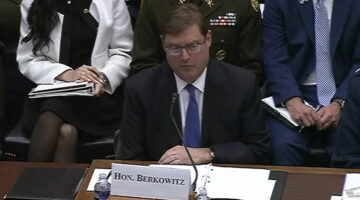
Berkowitz out at DoD Space Policy office
Gancio has a background in intelligence, most recently serving as an advisor to Sen. Tom Cotton, R-Ark., who chairs the Senate Select Committee on Intelligence.
Gancio has a background in intelligence, most recently serving as an advisor to Sen. Tom Cotton, R-Ark., who chairs the Senate Select Committee on Intelligence.

Some decision-making authorities, previously closely held by the president or secretary of defense, have been delegated to US SPACECOM, according to sources, but military space leaders want more freedom to act.

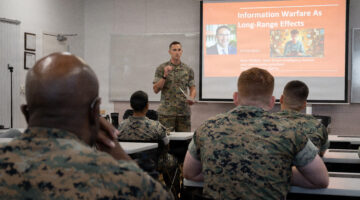
"Being able to tell the commander you don't need to do something is actually a pretty powerful message, as well."

"[W]e restrain ourselves from doing what is needful to avoid creating improper perceptions of 'weaponizing space.' In reality, space has been weaponized for at least two decades, and our slowness to absorb that reality has held back our progress," Space Force chief Gen. Chance Saltzman said today.

"In a conflict between NATO and Russia, the United States should be prepared to face an adversary that not only possesses advanced space and counterspace capabilities but has also learned lessons during the invasion of Ukraine about how to target Western space assets most effectively," finds a new Space Force-commissioned study.
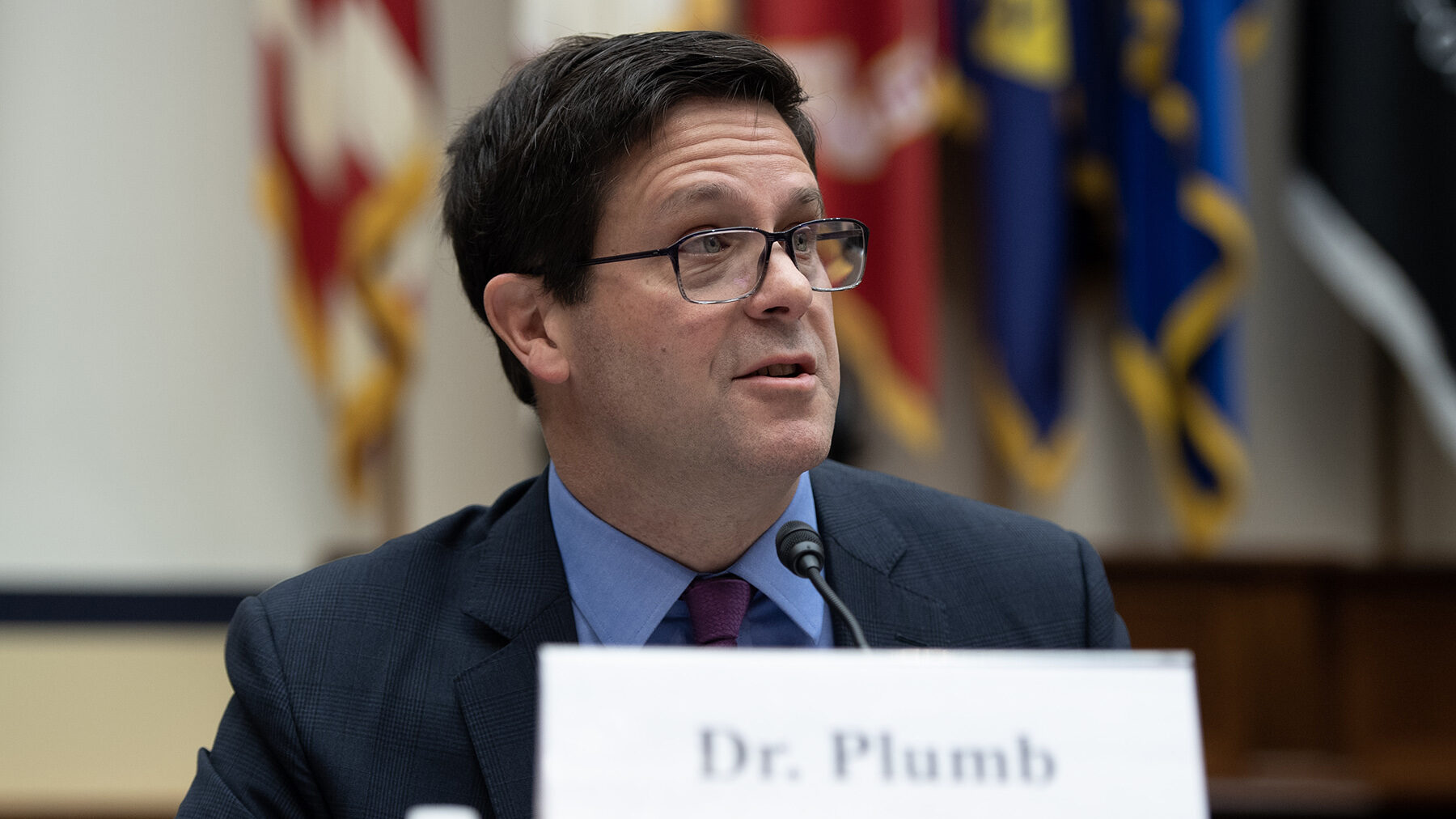
Under the new approach, there must be a technical rationale for stamping a space program as special access, not simply because of a service policy decision, said DoD space policy czar John Plumb.
"Despite the focus on diplomacy and governance and references to 'humanity,' it’s not a warm and fuzzy policy," Jessica West, of Canada's Project Ploughshares, explained. "It is firmly rooted in national interest — which is fair."


Systems that can work independently while still being part of a unit are critical to carrying out multi-domain operations.

"I think the FCC needs some remodeling," Chairwoman Jessica Rosenworcel said, announcing the new bureau as well as a new, separate International Affairs office.

The directive officially codifies the responsibilities of the Space Force, Space Command and the assistant secretary for space policy, as well as formalizing the "tenets" of responsible behavior for the military laid out by Secretary Lloyd Austin in a memo last year.

The Aerospace study found that controlling the creation of dangerous space junk is a regulatory arena "where clarity is badly needed," for one.

"Congress can hold politicals accountable -- not so much with the uniformed officers," one former DoD official said.

There is no single answer to the drone threat, pushing the Pentagon toward a broader mix of defenses.

The India ASAT test could have provided an opportunity for leadership from the Trump administration to help prevent the creation of space debris.

New DASD for space policy: Douglas L. Loverro appointed to SES. Loverro was executive director for the Space and Missile Systems Center colinclarkaol